Table of Contents
- What Makes a Farm to Table Herb Experience Authentic
- Herb Farm Workshops for Beginners: What to Expect
- Best Practices for Sustainable Herb Harvesting
- Seasonal Ingredients and the Tasting Menu Connection
- Educational Workshops, Foraging, and Culinary Heritage
- Dietary Inclusivity and Customization at Herb Farms
- Budget-Friendly Alternatives for Herb Experience Seekers
- Frequently Asked Questions
Last Updated: September 28, 2026
What Makes a Farm to Table Herb Experience Authentic
Authentic farm to table herb experiences are built on transparency: you can see where the herbs grow, meet the people who tend them, and trace every ingredient from soil to plate. That separates a genuine working farm from a shop with a few decorative planters.
Soil-to-Plate Transparency and Food Provenance
Food provenance means knowing where an ingredient was grown, who grew it, and how it was handled after harvest. On an authentic herb farm, that story is visible, not printed on a label.
Ask three questions before you book:
- Can I walk the growing beds during my visit?
- Who leads the workshop, a grower or a hired presenter?
- How are herbs harvested and processed after I pick them?
Herb Farm Workshops for Beginners: What to Expect
A beginner herb farm workshop typically runs one to three hours and covers plant identification, harvesting technique, and one or two hands-on projects such as infused oil or a fresh herb bundle. You leave with something you made, not just notes.
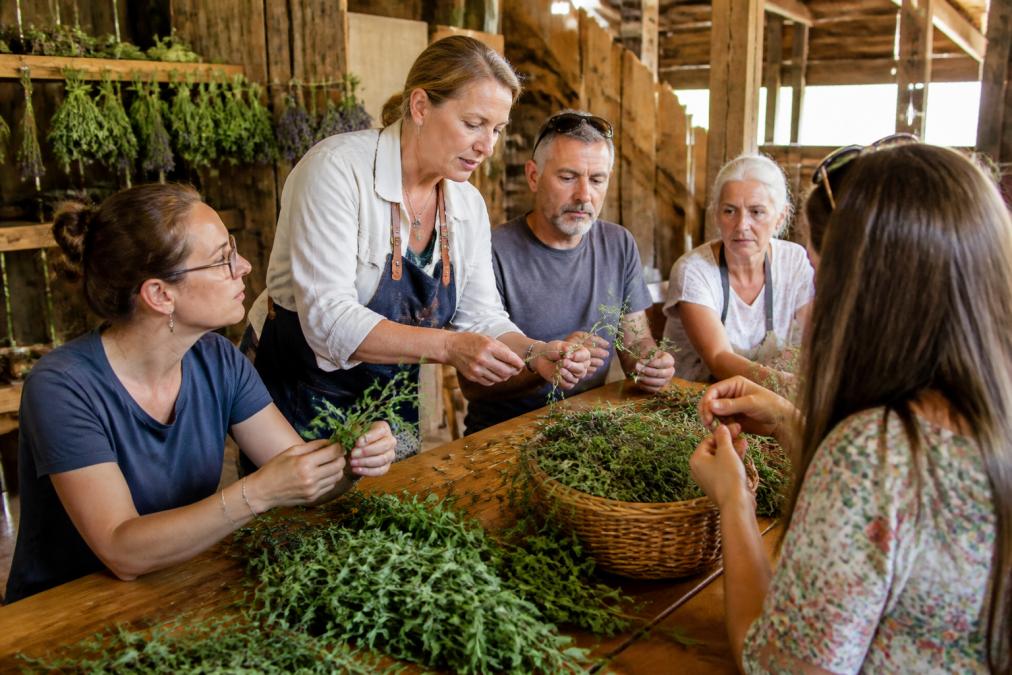
Hands-On Culinary Arts and Fresh Herb Techniques
Fresh herbs behave differently from dried ones. Delicate leaves like basil and cilantro go in at the end of cooking; woody herbs like rosemary and thyme stand up to heat and can be added early.
Expect to practice:
- Chiffonade and rough chopping without bruising leaves
- Building an herb butter or vinegar infusion
- Pairing herbs with seasonal dishes
Best Practices for Sustainable Herb Harvesting
Sustainable herb harvesting means taking only what a plant can regrow, cutting above the growth node, and leaving enough foliage to keep producing. Done right, a healthy plant can be harvested repeatedly through the season.
Follow these practices:
- Harvest in the morning after dew dries, when oils are most concentrated
- Never strip more than one-third of a plant at once
- Pinch flower buds on leafy herbs to keep leaf production going
- Use clean, sharp snips to avoid crushing stems
Why the Cut Point Matters
On soft-stemmed herbs like basil, mint, and cilantro, the growth node is the pair of tiny leaves just above a leaf joint. Cutting directly above it signals the plant to branch into two new stems instead of one, roughly doubling your usable harvest over a season; cut below and you remove the next growing tip, stalling regrowth for a week or more.
Soil Health, Rotation, and Composting
Many growers rotate beds and compost spent plant material, keeping soil healthy without heavy chemical inputs. Organic production starts with living soil, not a spray schedule. A few mechanisms are worth understanding so you can ask better questions on a farm visit: These regenerative practices ultimately ensure that the harvested crops retain the potent properties required to produce high-quality organic botanical remedies for your home apothecary.
- Crop rotation: Moving herbs to a different bed each season interrupts pest and disease cycles that build up when the same family (mint, parsley, dill) grows in the same spot year after year.
- Composting: Spent stems, potting mix, and kitchen trimmings break down into finished compost that returns organic matter and slow-release nutrients to the beds. The USDA's Natural Resources Conservation Service publishes guidance on composting and soil health.
- Mulching: Straw or leaf mulch holds moisture, suppresses weeds, and moderates soil temperature, reducing irrigation demand in summer.
- Cover cropping: In off seasons, growers plant nitrogen-fixing cover crops like clover or vetch to rebuild soil fertility between herb plantings.
How to Judge Sustainability Claims on a Farm Visit
"Sustainable" and "regenerative" are marketing words until a farm can show you the practice behind them. Ask:
- What happens to spent plant material? Compost pile, on-farm worm bin, or landfill? The answer tells you whether the farm closes its own loop.
- Is there a rotation plan? A grower who can name which bed held which crop last season is managing soil, not just harvesting it.
- How is water managed? Drip irrigation, rain catchment, or overhead sprinklers? Drip and catchment reduce waste; overhead loses a large share to evaporation.
- Are inputs synthetic or biological? Compost, fish emulsion, and cover crops are common organic inputs; synthetic nitrogen fertilizers are not.
- Is anything certified? USDA Organic certification is a verifiable third-party standard. Many small farms follow organic practices without certifying because of cost, so ask about practices, not just the seal.
Waste Reduction and the Harvest Window
A meaningful share of an herb farm's waste is edible but unsellable: bruised leaves, market-trimmed stems, and surplus from a peak harvest week. Farms that track this often redirect it into vinegars, infused oils, pestos, or dried blends rather than the compost pile. Ask whether the farm preserves surplus or discards it, preservation extends the harvest window past the fresh season and turns a waste stream into product, a clear sign of a farm that thinks in cycles rather than single harvests.
Seasonal Ingredients and the Tasting Menu Connection
A tasting menu built around seasonal ingredients changes with the harvest, and that is the point. Spring brings tender chives, mint, and parsley; summer favors basil and dill; fall leans on sage, rosemary, and thyme.
| Season | Peak Herbs | Common Tasting Menu Use |
|---|---|---|
| Spring | Chives, mint, parsley | Salads, light sauces |
| Summer | Basil, dill, cilantro | Pestos, cold dishes |
| Fall | Sage, rosemary, thyme | Roasts, warm grains |
| Winter | Preserved and dried herbs | Infused oils, vinegars |
Why the Season Changes the Flavor, Not Just the Menu
Seasonality is not a calendar gimmick; it reflects real chemistry in the plant. Herbs harvested in cool, slow-growth conditions concentrate different aromatic oils than the same herbs pushed by summer heat. Basil cut in July, at peak sun, carries more of the sweet, clove-like compounds that make fresh pesto taste bright; the same basil grown cool and leggy in early spring tastes flatter and more vegetal.
How a Farm-to-Table Menu Is Actually Built
A multi-course tasting menu at a farm often pairs each course with the herb that defines it, turning dinner into a short lesson on the season. The build usually follows a sequence:
- Harvest walk first. The chef or grower walks the beds the morning of service and builds the menu around what is at peak, not around a fixed recipe.
- Herb as the through-line. One or two herbs anchor the menu and reappear across courses in different forms: fresh, infused, dried, or as a finishing oil.
- Course progression by intensity. Light, delicate herbs open the meal; resinous, woody herbs close it. Mint and chives lead; rosemary and sage finish.
- Preserved herbs in the off-season. Winter menus lean on herbs the farm put up in summer, which is why a good farm kitchen treats preservation as part of menu planning, not a leftover task.
Questions That Reveal Whether the Menu Is Truly Seasonal
- How often does the menu change? A menu that shifts weekly or biweekly is following the harvest. A menu that changes once a season is following a calendar.
- What happens when a crop fails or peaks early? A kitchen that can describe a substitution on the fly is working from the field. One that serves the same dish regardless is working from a recipe.
- Are any herbs dried or preserved on-site? On-site preservation is the bridge between fresh season and winter menu, and it is a strong signal of a working farm kitchen.
- Who decides the menu, the chef or the grower? The most authentic experiences put the grower in the conversation, because the field sets the constraints.
USDA Local Food Marketing Practices guidance outlines how direct-to-consumer farm sales work, which helps you understand what "local" legally means on a label and why a named farm on a menu carries more weight than a generic claim.
Educational Workshops, Foraging, and Culinary Heritage
Beyond basic classes, some farms offer foraging walks and heritage workshops that connect regional cuisine to the land, teaching you to identify wild herbs safely and understand how earlier generations cooked with what grew nearby.
Dietary Inclusivity and Customization at Herb Farms
Dietary inclusivity is a real differentiator most farms still overlook. A good herb experience can accommodate gluten-free, dairy-free, vegan, and low-sodium needs with advance notice.
Ask before you book:
- Can the tasting menu be adjusted for allergies?
- Are infused oils and vinegars made without shared allergens?
- Is there a nut-free or gluten-free option for hands-on projects?
Budget-Friendly Alternatives for Herb Experience Seekers
Not every authentic herb experience requires a full tasting menu budget. Self-guided farm visits, pick-your-own herb days, and short introductory classes cost far less than multi-course dinners while still putting you in the fields.
Lower-cost options worth seeking:
- Self-guided walking tours during open farm hours
- Pick-your-own herb days priced by the bundle
- Short single-topic classes, such as making herb vinegar
- Farm stand visits combined with a brief grower talk
Frequently Asked Questions
What defines an authentic farm-to-table herb experience?
An authentic farm to table herb experience means the herbs you taste, smell, and take home were grown on the property and harvested within hours or days. You can see the fields, meet the growers, and trace ingredients from soil to plate. It also includes hands-on learning, such as workshops on sustainable herb harvesting or culinary techniques using fresh herbs. Transparency about growing practices, like organic or pesticide-free methods, is a key marker of authenticity.
What can visitors expect during a workshop at an herb farm?
Expect a hands-on session that lasts one to three hours. You might harvest herbs, make infused oils or vinegars, or learn culinary techniques for fresh herbs. Many workshops include a guided field walk to identify seasonal ingredients and discuss sustainable agriculture. Small groups are common, so you get personal attention. You will leave with recipes, a handmade product, and practical skills you can use at home.
Are herb farm tours suitable for families?
Most herb farm tours welcome families, though the best fit depends on the child's age and interest. Tours often include sensory activities like smelling and tasting herbs, which engage younger visitors. Workshops for beginners may have age minimums for safety with tools. Check ahead for family-friendly times and whether strollers can navigate the paths. Many farms offer shorter, flexible visits that work well for kids.
What are the benefits of participating in local herb-based agritourism?
Agritourism supports local farmers and keeps money in the community. You get access to farm-fresh, organic produce and artisanal products that are hard to find elsewhere. It is also educational: you learn how herbs are grown, harvested, and used in culinary arts. For wellness-focused visitors, time on a working farm can be restorative. Plus, you gain skills like sustainable herb harvesting that you can apply in your own garden.
How do I prepare for a visit to a working herb farm?
Wear closed-toe shoes and clothes you do not mind getting dirty. Bring a hat, sunscreen, and water, since you will be outdoors. If you plan to harvest, ask whether you need to bring your own snips or gloves. Check the farm's schedule and book ahead if you want a specific workshop. For dietary needs, let the farm know in advance so they can customize a tasting or meal.
What types of artisanal products are typically available at herb farms?
You will often find herb-infused oils and vinegars, dried culinary herb blends, herbal teas, and baked goods like scones made with farm-grown ingredients. Lavender products such as lotions, soaps, and sachets are common at farms that grow it. Some farms also sell fresh-cut herbs, seedlings, and gift sets. Availability shifts with the season, so ask what is freshest during your visit.
Comments
Post a Comment